Trump AI Order Survives the Midterm Loss: What Can Change
Democrats won the US House and Senate on 3 November 2026, but the Trump AI order of December 2025 against state laws stays in force. Congress can't repeal it alone, and he has threatened vetoes. What changes from January is oversight, and a broad federal law overriding states now looks unlikely.

Key points
- • The Trump AI order, Executive Order 14365 of 11 December 2025, binds federal agencies and needs no vote in Congress.
- • From January, Democrats can refuse to pass any national law that overrides state AI rules, and that is their strongest card.
- • With Washington likely gridlocked, state laws become the real AI rulebook for the US.
Donald Trump's party lost both houses of Congress on 3 November, but the executive order he signed to fight state AI laws survives the defeat. Trump himself was not on the ballot, as he was quick to point out: "I wasn't on the Ballot and if I was, we would have won IN A LANDSLIDE!"
The Associated Press called the Senate and then the House for Democrats, who hold at least 54 of 100 Senate seats and more than 250 House seats by network projections, with Mississippi, Alaska and about 25 to 29 House races still uncalled as of 6 November. Millions of Indians use US-built AI tools such as ChatGPT, Gemini and Claude, so who writes those companies' home rules matters here too.
The short version: Democrats can now stop things and ask hard questions. They can't undo Trump's AI policy on their own.
The Trump AI order against state laws stays in force
The Trump AI order, Executive Order 14365 of 11 December 2025, binds federal agencies and needs no vote in Congress. It set up a Justice Department task force "whose sole responsibility shall be to challenge State AI laws", and threatened to cut broadband funds to states with what it calls onerous rules.
Removing it would take a new law, which Trump can veto. He has already said so: "I think they're gonna want to work with me. Otherwise, I'd just veto everything." Overriding a veto needs two-thirds of both chambers, about 290 House and 67 Senate votes. Democrats have roughly 250 to 260 and 54 to 56.
The order has moved more slowly than its deadlines suggested. Commerce was told to list "onerous" state laws within 90 days, around March, but our search of the Federal Register on 6 November found no such list. The FTC's statement on state laws is still only a proposal, and the one court action we found is the department's intervention against Colorado's law.
Democrats can block, investigate and hold hearings from January
From January, Democrats can refuse to pass any national law that overrides state AI rules, and that is their strongest card. Republicans could not get this done even with full control: the Senate stripped a 10-year ban on state AI laws by 99 votes to 1 in July 2025.
Congress meets again in early January. Law firm Morrison Foerster expects "committees across Congress to hold hearings with technology and AI leaders, along with scrutiny of data-center energy costs and chip exports". A Democratic Senate can also block nominees to agencies such as the FCC.
The likely committee chairs have made their views plain, though none of the jobs is final. Maria Cantwell, in line for Senate Commerce, said in October that "we need clear safety standards, continuous testing, and reporting of serious failures". Hakeem Jeffries, in line to be Speaker, has spoken of an "AI safety crisis", according to PPC Land's report of his Verge interview. We found no statement on AI from either since the vote.
California and New York now carry more weight
With Washington likely gridlocked, state laws become the real AI rulebook for the US. "If Congress is gridlocked, what happens in California will govern AI for the U.S. and the world," Scott Singer of the Carnegie Endowment told Time.
California's SB 53 already makes large AI developers report critical safety incidents within 15 days. New York's RAISE Act, signed last December, starts on 1 January 2027 with a 72-hour reporting rule. SB 53's author, Scott Wiener, won a House seat on Tuesday.
"Preemption is dead" would overclaim, though. The bipartisan FRONTIER Act carries a narrow override of state rules on frontier-model safety, and child-safety bills have real momentum: the KIDS Act passed the House 267-117 in June, and COPPA 2.0 cleared the Senate unopposed in March.
Voters ranked AI last of five issues, but rejected data centres locally
AI was a real issue in this election, but not the main one. In the national exit poll, 56% of voters called AI and data centres a crucial or major factor, the lowest of five issues, behind corruption, the cost of living, Iran and immigration. Asked which party handles AI better, 43% said neither.
Trump's own explanation had nothing to do with AI: "I think part of it was Iran," he told Fox, as ABC reported. Local anger was sharper. Voters sided against data centres in 40 of 41 local ballot measures, according to CNBC's report of Ballotpedia's count, though those results are preliminary and the questions varied widely.
Markets noticed. The Nasdaq fell 5.52% on Thursday, with CNN reporting fears that Democrats' gains could slow the AI buildout.
What it means for you
Your AI subscriptions: we found no company announcing a price or feature change because of the vote, as of 6 November.
Indian rules are separate: MeitY's own AI consultation paper is still awaited. Our India AI regulation guide explains what is law here today.
New words, same policy: Trump's September order renamed AI "Super Intelligence" across the US government. Our guide to that order explains it.
The money: AI super PACs spent over $70 million on this election, and few races turned on it.
Chips, visas and tariffs: our India explainer covers what a Democratic Congress can't change.
The next dates to watch: Alaska's Senate count can't finish before 18 November, New York's RAISE Act starts on 1 January, and the new Congress sits in early January.
Sources: Executive Order 14365; FTC proposed policy statement, 7 July 2026; H.R. 9925, the FRONTIER Act; California SB 53; New York's RAISE Act; NBC's House and Senate results and exit poll; AP via PBS; Time's live results; Fox News; ABC7; CNN.
How we reported this: we read the executive orders, bills and Federal Register notices above, and searched the Federal Register for the Commerce list, on 6 November 2026. Seat counts are from NBC, Forbes, CNN and Yahoo that day and will change. AP and Reuters pages refused our requests, so AP's calls are cited through PBS and Time.
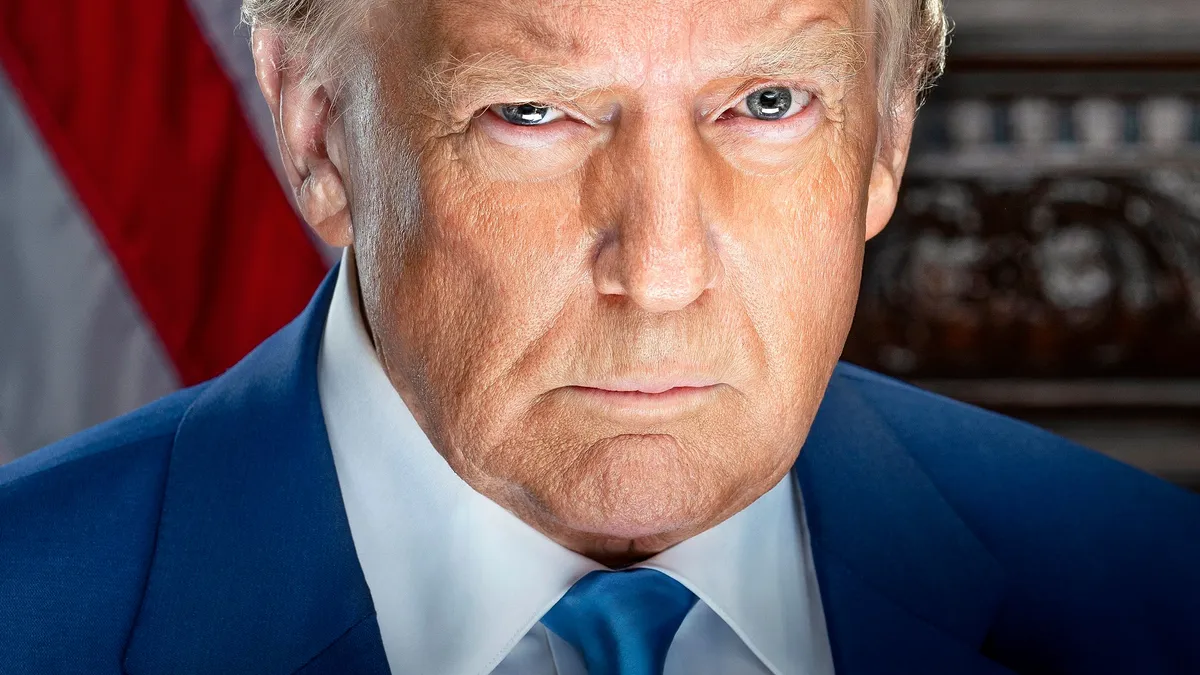
Cover image: file photo of Donald Trump's official presidential portrait, taken in January 2025. Daniel Torok, Public domain, via Wikimedia Commons.
Source: https://www.govinfo.gov/content/pkg/FR-2025-12-16/html/2025-23092.htm
Related tools
We may earn a commission if you buy through our links. This doesn't affect our rankings. Learn more about our affiliate disclosure.

ChatGPT
The most widely used AI chatbot for writing, coding, and research.

Gemini
Google's multimodal AI assistant integrated across Search, Workspace, and Android.

Claude
Anthropic's AI assistant known for careful reasoning and long context.
See more of BestAI.in in Google's Top Stories: add us as a preferred source.