TRAI new rules let telcos use AI agents for complaints
TRAI's complaint rules of 2 November 2026 let telcos such as Jio and Airtel run customer care with AI agents round the clock. From 90 days after gazetting, you must be told when a bot answers, humans must be available 16 hours a day, and care-line menus must offer a person.

Key points
- • Complaint centres must now run round the clock instead of 16 hours a day, and a human must still be available for at least 16 of those hours, every day of the week.
- • Any IVR (the recorded voice menu) or conversational AI agent on the customer care number must offer five things: a language choice; a pick between "Complaint", "Appeal" and "Service Request/Query"; a sub-menu for your issue; a way to reach a human from within each of those three categories; and a call-back if you are waiting in the queue for one.
- • Complaints sent to TRAI rose from 44,733 in 2023-24 to 73,081 in 2025-26, a 63% rise, according to the regulator's memo.
The Telecom Regulatory Authority of India (TRAI) on Monday let telecom companies staff complaint lines with AI agents at any hour, provided a human is available at least 16 hours a day.
The change sits in the Telecom Consumers Complaint Redressal (Fourth Amendment) Regulations, 2026, dated 2 November. These TRAI new rules cover mobile operators such as Jio, Airtel, Vi and BSNL, and internet providers with more than 10,000 subscribers. For anyone who has shouted "talk to an agent" at a phone menu, the headline change is simple: on a care line, a bot must now admit it is a bot.
The regulation says a customer "shall get a notification that he is communicating with an AI Agent" whenever that happens, and that automated systems and AI agents must run "with appropriate human oversight". An AI agent here means software that holds a conversation and acts on your request, not a press-1-for-billing menu. CERT-In's October advisory on AI agents dealt with a different risk: agents reaching into company systems.
For the wider picture of what India already regulates in AI, see our guide to India AI regulation.
Complaint lines go 24x7, with humans for 16 hours
Complaint centres must now run round the clock instead of 16 hours a day, and a human must still be available for at least 16 of those hours, every day of the week. The rest of the time they can be staffed by "automated systems or AI agents", or a mix.
TRAI's memo says late-night support can lean on automation because call volumes are lower then. Appeals can be registered at any hour.
Every phone menu must offer a way out to a person
Any IVR (the recorded voice menu) or conversational AI agent on the customer care number must offer five things: a language choice; a pick between "Complaint", "Appeal" and "Service Request/Query"; a sub-menu for your issue; a way to reach a human from within each of those three categories; and a call-back if you are waiting in the queue for one.
Some stakeholders asked for a human option at every level of the menu. TRAI said no: its memo says offering a person at the third stage, the issue sub-menu, "strikes an appropriate balance" between automation and support. TRAI also wants complaint options placed early in the call, with plans and offers moved to their own category, after noting that promotions at the start of calls waste customers' time.
Apps and websites must let you file complaints and appeals, add a text or voice note, and track status. Chatbots or WhatsApp channels, if used, must offer the same options.
Complaints to TRAI rose by 63% in two years
Complaints sent to TRAI rose from 44,733 in 2023-24 to 73,081 in 2025-26, a 63% rise, according to the regulator's memo. TRAI does not handle individual complaints, but people write to it anyway:
| Financial year | Complaints received by TRAI |
|---|---|
| 2023-24 | 44,733 |
| 2024-25 | 55,978 |
| 2025-26 | 73,081 |
Source: TRAI explanatory memorandum to the Fourth Amendment Regulations, 2 November 2026. The 63% rise is our calculation from these figures.
The regulator says these showed "a fair amount of dissatisfaction" with operators' own complaint systems. Operators now face financial disincentives of ₹1,000 for each complaint and ₹5,000 for each appeal closed in breach of the rules, capped at ₹20 lakh a quarter per service area.
When the TRAI new rules on AI agents apply
The regulation does not apply in one go. Most of it takes effect 30 days after it is published in the Official Gazette; oversight committees, feedback surveys and reporting follow after 60 days. The 24x7 complaint centres, the AI-agent notice, the phone-menu rules and the app and website requirements wait 90 days.
TRAI dated the notification 2 November, but the clock starts on Gazette publication, which BestAI could not confirm on 3 November. TRAI's memo also says it may extend deadlines for multilingual support and 24x7 operations "wherever justified".
What it means for you
- You get less time to appeal. The window to appeal a closed complaint falls from 30 days to 15. Appeals can now be filed through the operator's app or website, and the appellate authority must decide within 15 days.
- Three days is the default. Where no other TRAI rule sets a deadline, complaints and service requests must be dealt with within three days.
- Your language counts. Complaint centres must offer at least one official language of your state, besides Hindi and English.
- Ask for a person. Once the 90-day rules apply, an AI agent that hides what it is, or a menu with no human option inside the complaint branch, is a breach you can raise in an appeal.
This rule is separate from TRAI's draft guidelines on responsible AI in telecom, released on 30 October, which would make operators accountable for the AI systems they run, including customer-facing ones. Comments on that draft close on 27 November and go to advmn@trai.gov.in.
Our list of AI customer support tools shows what these agents look like from the company side.
Sources: TRAI, Telecom Consumers Complaint Redressal (Fourth Amendment) Regulations, 2026, with explanatory memorandum; TRAI press release 146/2026; TRAI press release 145/2026 on draft AI guidelines.
How we reported this: we read TRAI's 46-page regulation and memorandum and both press releases on trai.gov.in on 3 November 2026, between 07:40 and 08:30 IST. We could not reach egazette.gov.in to confirm the Gazette publication date, so the exact start dates are not yet known.
BestAI drafts news with AI assistance from the sources listed; our editor checks the facts against them before publishing.
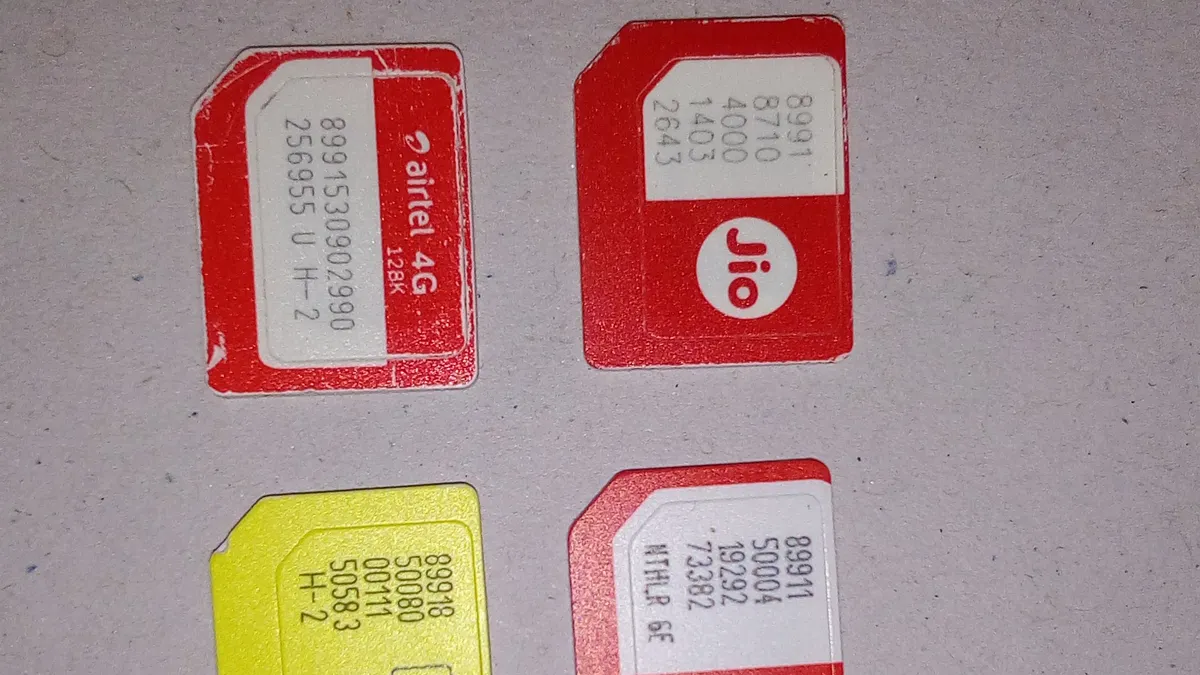
Cover image: Airtel and Jio 4G SIM cards on a table, with two more SIM cards below. Anwesh pati, CC BY-SA 3.0, via Wikimedia Commons.
Source: https://trai.gov.in/sites/default/files/2026-11/Regulation_02112026.pdf
Related tools
We may earn a commission if you buy through our links. This doesn't affect our rankings. Learn more about our affiliate disclosure.

ChatGPT
The most widely used AI chatbot for writing, coding, and research.

Gemini
Google's multimodal AI assistant integrated across Search, Workspace, and Android.
See more of BestAI.in in Google's Top Stories: add us as a preferred source.